Bringing Answers to Life: The FAQ Illustration Concept
Let’s be honest: nobody really enjoys reading a FAQ page. It’s usually a wall of text, a dry list of problems and solutions that feels more like a chore than a resource. But what if you could transform that necessary evil into a genuine brand touchpoint? That is exactly where the FAQ Illustration Landing Page Concept steps in to change the game. This isn't just about answering questions; it’s about doing so with personality, warmth, and visual clarity. If you are a designer, marketer, or entrepreneur looking to inject some life into your user experience, understanding how to wield this specific design asset is going to be a massive advantage for your projects.
Understanding the Visual DNA
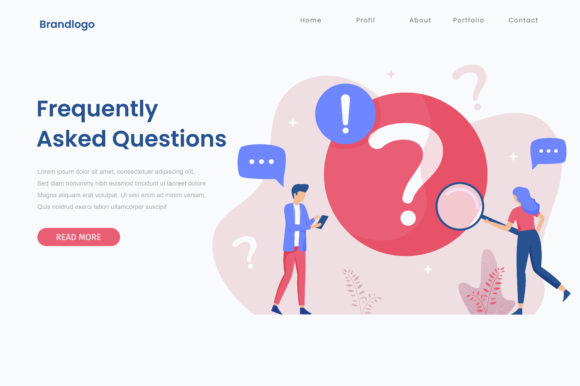
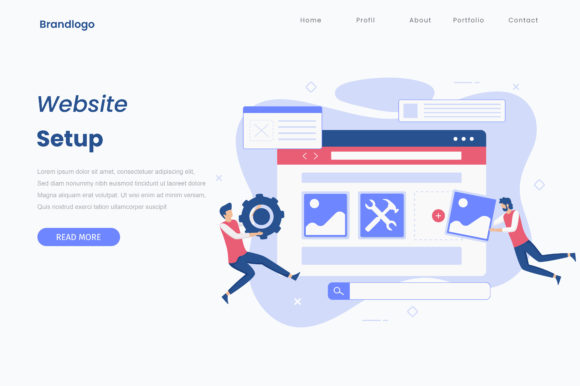
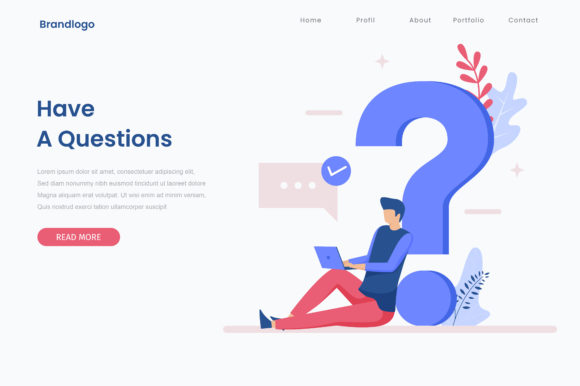
When you first encounter the FAQ Illustration Landing Page Concept, the immediate takeaway is its modern, approachable aesthetic. We are moving away from the cold, corporate look of the past decade and leaning heavily into organic shapes, soft gradients, and character-driven storytelling. This design style usually features flat or semi-flat design elements—think friendly avatars, abstract representations of technology, or metaphorical scenes depicting "problem solving" and "support." The color palettes tend to be vibrant but balanced, ensuring that the illustrations pop without overwhelming the necessary text content.
The personality here is distinctly human. It suggests that behind the screen, there are real people ready to help. It feels less like a database query and more like a conversation. This visual language is crucial for brand identity. If your brand voice is helpful, innovative, or playful, this concept fits like a glove. It softens the hard edges of technical support and makes the information digestible. It is a modern typography and illustration hybrid that prioritizes user comfort. The layouts are typically spacious, utilizing negative space effectively to prevent the "information overload" feeling that usually plagues help centers.
Strategic Applications Across Industries
You might be thinking, "This looks great, but where does it actually fit?" The versatility of the FAQ Illustration Landing Page Concept is one of its strongest assets. It is not limited to just a "Help" section on a website. For mobile applications, this design language is perfect for onboarding flows. Instead of a dry tutorial, you can use these illustrations to guide users through setup, answering common "How do I...?" questions before they even arise.
For entrepreneurs and small business owners, this concept is a lifesaver for landing pages. When you are running a campaign, you need to overcome objections instantly. A visually engaging FAQ section near the bottom of your sales page, utilizing these illustrations, keeps the user on the page longer and addresses hesitations without feeling like a hard sell. It maintains the flow of the page rather than breaking it.
Think about posters and banners for physical or digital events. If you are hosting a workshop or a conference, the "Need Help?" or "Info Desk" signage can be elevated using this style. It turns functional signage into part of the event's aesthetic. Similarly, publishers and bloggers can use these assets to create "Start Here" guides or "About" pages that feel curated and professional. It signals to the visitor that you care about their experience, which builds immediate trust.
File Flexibility: EPS and JPEG
Practicality is just as important as aesthetics. A beautiful design is useless if you can't manipulate it to fit your specific needs. This is where the file inclusions—Eps File and Jpeg File—come into play, offering a robust toolkit for various levels of editing.
The Eps File (Encapsulated PostScript) is the heavy lifter here. This is a vector format, which means it is resolution-independent. Whether you are designing a small icon for a mobile UI or blowing up the illustration for a massive trade show banner, the lines will remain crisp and the colors solid. For graphic designers, the EPS format is essential for packaging design or complex editorial design layouts where you might need to isolate specific elements, change colors to match a specific brand identity, or integrate the illustration into a larger composition in software like Adobe Illustrator or CorelDRAW.
On the other hand, the Jpeg File is the "ready-to-go" option. It’s perfect for web design implementation where file size and load times are a priority, or for social media graphics where you need a quick, high-quality image to accompany a post. If you are a blogger or content creator who isn't proficient in vector software, the JPEG allows you to use the illustration as-is in drag-and-drop website builders or presentation software. Having both formats ensures that the asset is accessible to everyone, from the seasoned designer to the hobbyist setting up their first online store.
Enhancing User Engagement and Trust
Why does this visual approach work so well psychologically? It boils down to reducing cognitive load. When a user lands on a page with a complex problem, they are often frustrated. Dense text exacerbates that frustration. The FAQ Illustration Landing Page Concept acts as a visual pause. It breaks up the monotony, guides the eye, and provides context clues through imagery.
This is a critical component of UI (User Interface) design. Good UI is invisible, but great UI is empathetic. By using illustrations that depict the user's situation—perhaps a character looking confused at a laptop, followed by a character looking relieved—you are validating their experience. This emotional connection fosters trust. A user who feels understood is more likely to convert, subscribe, or return.
Furthermore, consistency in these assets helps with professionalism. If your marketing materials use a specific style of illustration, and your support pages use a completely different, generic style, it creates a disjointed experience. Using a cohesive concept like this ensures that your brand identity remains solid from the first ad impression all the way to the post-purchase support phase.
Practical Implementation Tips
Integrating this concept requires a bit of strategy. First, consider your font pairing. Since the illustrations are likely to be modern and clean, you want a typeface that complements rather than competes. A clean sans serif font for body text usually works best for readability, paired with a distinctive display font for headings to grab attention. Avoid overly complex script fonts or handwritten fonts for the actual FAQ answers, as legibility is paramount when someone is looking for help.
Next, look at the hierarchy. Use the illustrations to denote different categories. For example, one style of illustration for "Billing," another for "Technical Support," and a third for "Shipping." This creates an instant visual shorthand that helps users navigate the content faster. It turns a static list into an interactive-feeling directory.
Finally, think about the medium. If you are using this for print design, ensure your color modes are correct (CMYK for the EPS). For digital, stick to RGB and optimize your JPEGs or convert your vectors to SVGs for faster web loading. The goal is to maintain the quality of the design assets while ensuring the performance of your platform isn't compromised.
Conclusion
The FAQ Illustration Landing Page Concept is more than just a set of pretty pictures; it is a functional tool for communication. It bridges the gap between necessary information and user enjoyment. Whether you are building a mobile application, refreshing your website, or creating banners for your next big launch, incorporating this style of visual design demonstrates a commitment to quality and user experience. It tells your audience that you value their time and their sanity, which is a message that resonates deeply in today's crowded digital landscape.