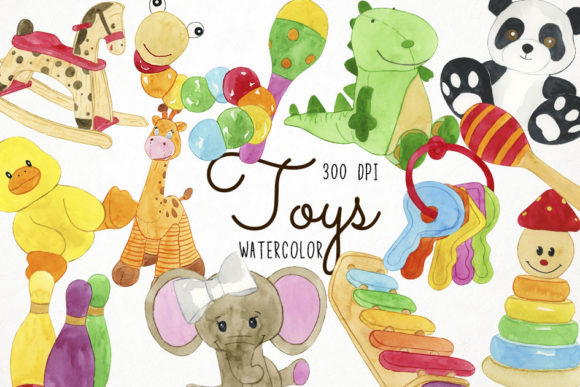
Watercolor Toys Clipart, Nursery: A Designer's Guide to Whimsical Graphics
There’s a distinct warmth that hand-painted elements bring to a design, a quality that digital tools often struggle to replicate. That’s precisely the charm of the Watercolor Toys Clipart, Nursery set. This collection of 13 hand-painted watercolor elements offers a tangible, organic feel, perfect for projects that need a touch of sincerity and playful elegance. It’s not just a set of images; it’s a toolkit for creating heartfelt, engaging visuals that connect on a human level. For designers, marketers, and creators, understanding how to leverage these assets is key to elevating your work beyond the generic.
The Visual Personality: More Than Just Clipart
At first glance, the Watercolor Toys Clipart, Nursery set presents a soft, inviting aesthetic. The hand-painted nature means each element has subtle imperfections—gentle color bleeds, varied brushstroke textures, and a natural transparency that feels authentic. This isn't sterile, flat vector art. The personality here is nostalgic, gentle, and full of character. It evokes a sense of craftsmanship and care, making it ideal for projects targeting audiences who value authenticity, such as parents, educators, boutique brands, and anyone in the wellness or lifestyle space.
The visual style is inherently versatile. The transparent PNG backgrounds at 300 DPI ensure these assets are print-ready and seamlessly integrate into layered digital designs. Whether you’re working on a logo design for a children's boutique or crafting social media graphics for a parenting blog, the soft edges and watercolor blends add depth without overwhelming a layout. The set’s cohesion comes from its consistent hand-painted style, allowing multiple elements to be combined in a single project without visual discord—a common challenge when mixing disparate design assets.
Strategic Applications Across Creative Projects
Knowing where the Watercolor Toys Clipart, Nursery set works best is about understanding its emotional resonance. In brand identity work, these elements can soften a corporate edge, making a brand feel more approachable and human. Imagine using a single watercolor teddy bear as a subtle accent in a packaging design for artisanal baby products or incorporating the entire set into a pattern for stationery. The effect is a premium font feel, but achieved through illustration rather than type.
For digital creators, the applications are vast. In web design, these clipart pieces can serve as delightful section dividers, background textures, or featured icons that break the monotony of standard UI elements. Bloggers and publishers can use them to create custom featured images, chapter headings in editorial design, or engaging visual metaphors in infographics. The key is restraint; using one or two elements thoughtfully often has more impact than scattering them everywhere. This approach maintains visual hierarchy and ensures the graphics support rather than distract from your core message.
Entrepreneurs and small business owners will find immense value in using these assets for marketing collateral. Think beyond the obvious: a watercolor toy train could illustrate a “journey” in a business presentation, or a set of blocks could symbolize “building” in an investor pitch. For crafters and hobbyists, the set is a gateway to professional-looking personal projects—custom birthday invitations, nursery wall art, or scrapbook pages that tell a story with warmth and personality. The commercial font licensing here is crucial; it typically allows for both personal and commercial use, but always verify the specific terms for your intended application, especially for large-scale commercial products.
Practical Guidance for Implementation and Pairing
Integrating the Watercolor Toys Clipart, Nursery set into your workflow requires a bit of strategic thinking. First, consider your project’s existing typeface choices. These watercolor elements pair beautifully with clean, simple fonts. A modern typography choice like a sans serif font with generous spacing provides a crisp counterpoint to the organic shapes, ensuring readability isn’t compromised. For a more whimsical feel, a gentle script font or handwritten font can complement the set’s personality, but use it sparingly—perhaps only for headlines—to avoid visual clutter.
Evaluating project fit is straightforward. Ask yourself: does my project require a touch of warmth, nostalgia, or handmade authenticity? If the answer is yes, this set is a strong candidate. For font pairing in a broader sense, think of the clipart as another design layer that interacts with your typography. Test combinations by placing a watercolor element near a heading and body text. Does the element enhance the visual hierarchy, or does it create competition? The goal is synergy, where the illustration and type work together to guide the viewer’s eye and reinforce the narrative.
When using the set, remember that less is often more. A single, well-placed toy can anchor a design, while a busy cluster might confuse the message. Pay attention to color—pulling a hue from the watercolor illustration and using it as an accent in your font or background can create a cohesive brand identity. Finally, always check the included files. With 13 distinct PNGs, you have a curated library. Review each one to understand its potential; a small detail in one piece might be the perfect solution for a design challenge you didn’t anticipate. This thoughtful approach transforms a simple clipart set into a powerful component of your creative toolkit, enhancing engagement and adding a layer of professional polish that resonates with your audience.